Run your fish farm, pond by pond.
Each fish batch is linked to its pond and tracked from fingerling to harvest. Water readings, feed, losses and sales are in one place, and you see what each cycle brings in.
15,000 FCFA per month per farm, every activity and the whole team included, no commitment.
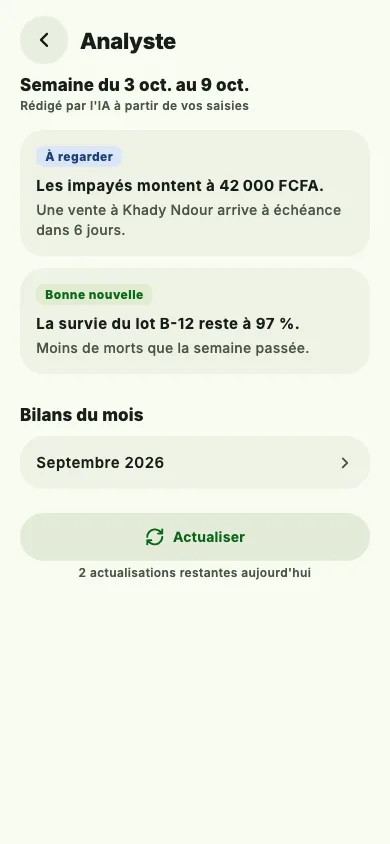
Real app screen with demo data (interface shown in French)
What you track in Wanar
Batches by pond and stage
Tilapia, catfish or another species: each batch moves through its stages, from fingerling to adult, in the pond where it lives.
Water readings
Temperature, dissolved oxygen, pH and aerator status, recorded with the time of measurement.
Low-oxygen alert
Below the oxygen threshold set for your farm (3 mg/L by default), a reading triggers an alert.
Feed and stock
Feed given is recorded on the pond, with its cost, and can be deducted from stock at the time of entry.
Harvests, sales and margin
Harvests, losses and fish sales: the fish-farming margin appears next to your other activities.
Figures come from what your team records: nothing is measured automatically by sensors.
In fish farming, oxygen and feed often decide the result of a cycle. Readings taken at set times and an alert when oxygen drops help you react before losing a batch.
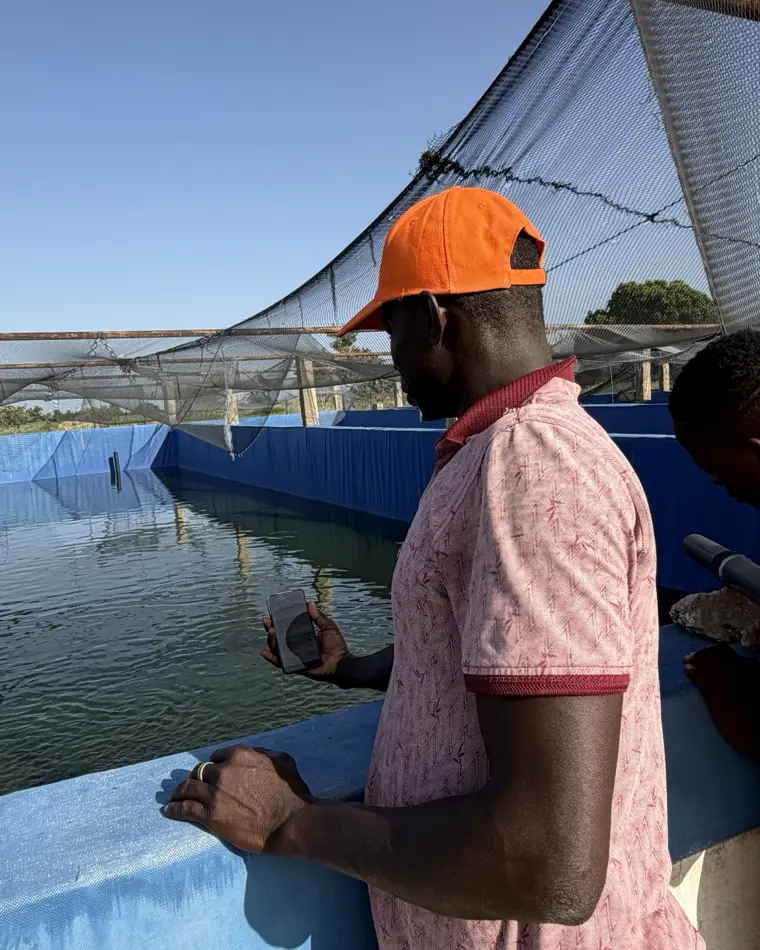
Wanar is used on the fish ponds of the Minawara farm, in the Kaffrine region of Senegal.
Frequently asked questions
Are water readings automatic?
No. Wanar does not connect to sensors: readings are entered by the team, from a phone or a computer.
Which fish species can I track?
The species is free text on each batch: tilapia, catfish (clarias) or another species.
Can I change the oxygen alert threshold?
Yes. The threshold is a farm setting; it is 3 mg/L by default.
Other activities tracked in Wanar
- Poultry farm management →Track your broiler and layer batches: feed, weighings, laying, deaths, sales and the margin of each batch. Web app and iPhone app.
- Livestock management →Track the headcount of your sheep, goat and cattle herds: births, sales, deaths, vaccinations, and the costs and sales of your livestock.
- Crop management →Track vegetable crops, orchards and rainy-season crops: planting, inputs, harvests in kilos, yield per hectare and sales.